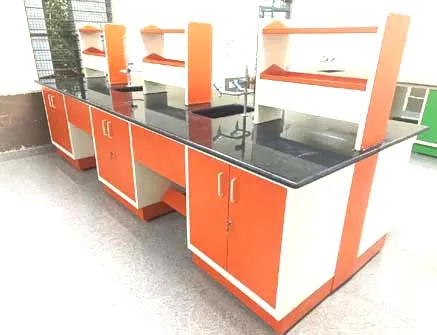
Smart Laboratory Table Designs for Arts and Science Colleges
When choosing lab tables
(for e.g., chemistry, physics, biology) you’ll want to ensure they meet practical, safety and durability requirements. Key features:
Material & Work-top
- Work-tops should be chemical resistant (for wet labs), heat resistant, scratch resistant. Eg. epoxy resin, phenolic resin, or granite tops.
- Frames should be durable: steel (SS/galvanised) with powder-coating or epoxy finish.
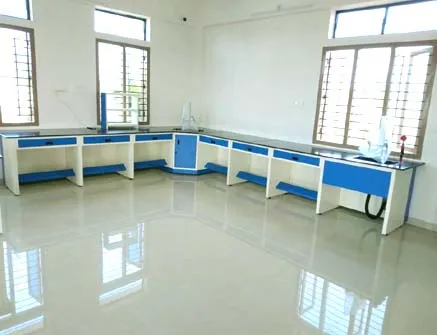
- Storage underneath (drawers/cabinets) or open leg space according to use.
Layout & Use Type
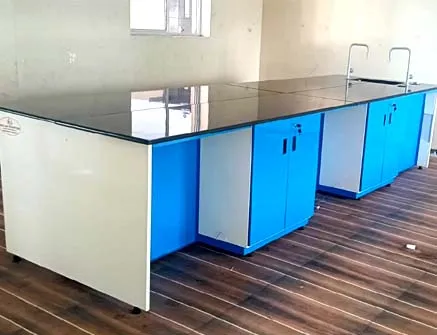
- Wall benches (one side against wall) and island benches (access from multiple sides) depending on room layout.
- Consider “wet” vs “dry” labs: chemistry/biology vs physics/computer. Wet labs require sinks, water/gas lines; dry labs less so.
- Ergonomics: correct bench height for standing/sitting, space for equipment, circulation.
Safety & Utility Features
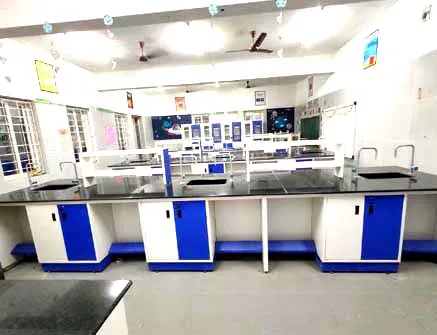
- Integrated utilities like gas nozzles, water taps, power outlets, drainage for chemistry labs.
- Rounded edges, anti-vibration (for precision equipment) in certain labs.
- Proper chemical storage (if table includes cabinets) and surfaces that withstand chemical spills.
Customisation & Service
- Ability to customise size, layout, configuration according to your lab size.
- Reliable manufacturer/supplier who can provide installation and after-sales.
Budget & Durability
- While you might find low cost tables, inexpensive often means weaker materials, less chemical resistance or fewer utilities.
- Long term value: durability, maintenance ease, adaptability for future needs.
AA Lab Furniture Recommendation for Your Arts & Science College
Since you’re setting up for a college (versus a small school) and likely want durability + versatility, we suggest:
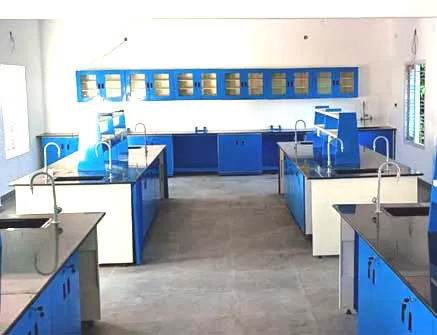
- Use island benches (accessible from multiple sides) for major labs (e.g., chemistry, biology) so many students can work together.
- Ensure chemical resistant tops (epoxy/phenolic/granite) especially for wet labs.
- Include good storage under benches for reagents, instruments.
- For simpler labs (e.g., general science or less chemical intensive), you can use more basic benches to save cost.
- Plan for utilities (gas lines, water taps, drainage) especially for chemistry.
- Make sure height and layout suit students (maybe mix of standing / sitting benches) and allow good clearance for equipment.
- Allocate budget for good quality: cheap tables may need replacement sooner.
Thanks for reading. I hope you can use this information. I am very interested in hearing from you. If you have feedback or comments on this set of tips, or suggestions for future messages, I’d love to hear from you. Please reach out to me at antony@aalabfurniture.com. I’m looking forward to our conversations. Thanks.